|
Did you know that each year, sudden cardiac arrest strikes more than 250,000 Americans?
Unlike a heart attack in which blood flow to the heart muscle is temporarily blocked, the primary cause of sudden cardiac arrest (SCA) is ventricular fibrillation a life-threatening condition in which the heart's normal electrical signals become erratic, causing the heart to cease pumping blood effectively. When ventricular fibrillation occurs, the victim immediately becomes unresponsive, stops breathing, has no detectable pulse and-without intervention-will die within minutes. Defibrillation, or restoring the heart's natural rhythm by applying an electrical shock, is the only definitive treatment for SCA.
Some facts about Sudden Cardiac Arrest:
- Many victims have no history of heart disease, or, if heart disease is present, it has not lead to impaired function.
- SCA strikes both men and women.
- The average age of SCA victims is 65, but many victims are in their 30's or 40's.
- SCA often strikes without warning.
- Cardiopulmonary resuscitation (CPR) and early defibrillation are the most critical factors in determining survival of SCA.
- Published studies indicate that survival rates from ventricular fibrillation can exceed 70 percent if defibrillation is administered within the first few minutes of SCA
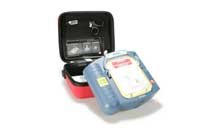
In many work environments, on-site medical departments are in place to respond to many emergency situations. But unlike other worksite medical emergencies such as lacerations and broken bones, survival from SCA requires immediate intervention. For optimal impact, CPR and defibrillation should be administered within four minutes of SCA. This is where the automated external defibrillator (AED) comes in.
Learn More About AEDs
|